Homeless Beggar People Minimal Vector Assets
Visual storytelling around sensitive social issues requires a delicate balance between impact and respect. When designing campaigns for non-profits, educational materials, or editorial content addressing poverty, the aesthetic choices you make carry significant weight. The Homeless Beggar People Minimal vector collection offers a streamlined solution for creators who need to communicate these difficult realities without resorting to exploitative imagery or overly complex illustrations that distract from the core message.
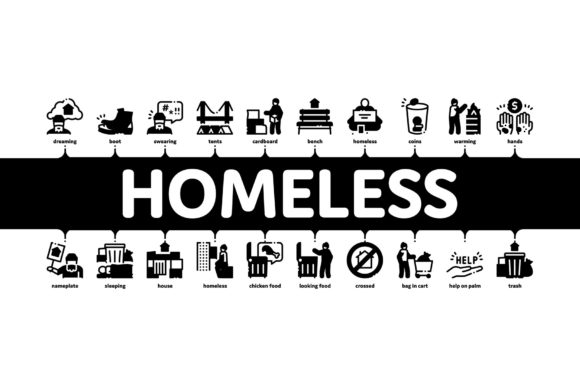
This specific style of illustration strips away unnecessary detail to focus on the universal human experience of hardship. By utilizing clean lines and simplified forms, these vectors allow designers to address topics like living on streets, poor human conditions, and abandonment with dignity. Whether you are working on an infographic web banner or a printed awareness pamphlet, having access to high-quality EPS and JPG formats ensures your project maintains professional standards across both digital and physical mediums.
The Power of Minimalist Social Illustration
Minimalism in social advocacy design is not about reducing the severity of the issue; it is about increasing clarity. When depicting a homeless beggar person or scenes involving trash and abandoned environments, hyper-realistic imagery can sometimes trigger viewer fatigue or defensive psychological responses. A minimal approach creates a necessary emotional distance that allows the audience to process the information objectively before engaging empathetically.
The Homeless Beggar People Minimal aesthetic achieves this by using symbolic representation rather than graphic reproduction. Key characteristics of this style include:
- Reduced Facial Features: Avoiding specific identities protects the dignity of those represented and prevents the "poverty porn" effect where suffering is consumed as spectacle.
- Symbolic Objects: Elements like a worn shoe, a begging cup, or discarded trash are rendered as clear icons rather than gritty textures, making them instantly recognizable at small sizes.
- Scalable Geometry: Because these assets are designed as vectors, they retain crisp edges whether displayed on a mobile screen or a large-format billboard.
- Neutral Color Palettes: Most minimal sets utilize muted tones that integrate easily into existing brand guidelines without clashing or overwhelming accompanying text.
This visual language is particularly effective for infographics. Complex data regarding homelessness statistics, shelter capacity, or economic disparity becomes digestible when paired with clean, consistent iconography. The viewer’s eye moves naturally through the data points, guided by the simplicity of the art rather than getting stuck on distressing photographic details.
Practical Applications Across Sectors
Versatility is the primary value proposition for any digital asset, and this collection serves a wide spectrum of professionals. Understanding where and how to deploy these illustrations can significantly enhance project outcomes.
Non-Profit and Advocacy Campaigns
For organizations dedicated to social services, budget constraints often limit custom illustration work. These pre-made vectors provide a cost-effective alternative that still looks bespoke. They are ideal for annual reports, donor newsletters, and social media awareness campaigns. The minimal style conveys professionalism and stability, which helps build trust with potential donors who want to see their contributions managed responsibly.
Educational and Academic Resources
Educators and textbook publishers face the challenge of teaching sociology, economics, and civics without traumatizing younger audiences. The Homeless Beggar People Minimal style provides age-appropriate visuals for classroom discussions about inequality and community support systems. Teachers can use these assets in slide decks and worksheets to illustrate concepts like urban planning challenges or social safety nets without introducing graphic content that might be unsuitable for K-12 environments.
Editorial and Journalism
Bloggers, journalists, and digital publishers often need featured images for articles discussing policy changes or human interest stories. Stock photography of real people raises ethical concerns regarding consent and privacy. Vector illustrations eliminate these legal and moral gray areas. An infographic web banner created with these assets can serve as a compelling header for op-eds or investigative pieces, signaling to readers that the content is analytical and thoughtful.
Commercial and Corporate Social Responsibility (CSR)
Businesses engaging in CSR initiatives need visuals that align with corporate branding while authentically representing their charitable efforts. The clean lines of minimal vector art bridge the gap between corporate polish and social conscience. These illustrations work well in internal training materials, sustainability reports, and partnership announcements, ensuring the visual tone remains consistent with the company’s broader identity.
Technical Considerations: EPS vs. JPG
Selecting the right file format is crucial for workflow efficiency and final output quality. This collection typically includes both EPS and JPG options, each serving distinct purposes in a professional pipeline.
EPS (Encapsulated PostScript) is your master file. As a vector format, it contains mathematical paths rather than pixels. You should always start with the EPS file if you plan to:
- Resize the illustration for large-format printing like banners or posters.
- Change colors to match specific brand hex codes or Pantone swatches.
- Edit individual elements, such as removing the trash element to focus solely on the human figure.
- Combine multiple assets into a single composite scene within Adobe Illustrator or Affinity Designer.
JPG (Joint Photographic Experts Group) is a rasterized, flattened version best suited for quick deployment. Use JPG files when:
- Inserting images directly into Word documents, PowerPoint presentations, or email newsletters.
- Uploading to platforms that do not support vector files, such as certain CMS editors or social media schedulers.
- You need a low-resolution preview for client approval before finalizing the high-res vector production.
Professionals should maintain an organized asset library where the EPS masters are archived separately from the JPG derivatives. This prevents accidental overwriting of editable source files and ensures you always have a scalable version available for future projects.
Ethical Design and Implementation Strategy
Using imagery related to homelessness carries inherent responsibility. Even when using minimal vectors, context matters. Before implementing Homeless Beggar People Minimal assets, evaluate your design against ethical best practices.
Avoid placing these illustrations in contexts that trivialize poverty or use it merely as a decorative backdrop. The imagery should always support a narrative of understanding, solution-building, or factual reporting. For example, pairing a beggar illustration with content about actionable volunteering opportunities or policy analysis is appropriate. Using the same image to sell unrelated consumer products or as generic page filler is not.
Consider accessibility as part of your implementation strategy. When using these vectors in web banners or digital documents, ensure alt-text descriptions are accurate and respectful. Instead of "homeless beggar," consider descriptive text like "minimalist illustration representing housing insecurity" or "vector icon of person experiencing poverty." This reinforces the dignified approach of the visual style and improves SEO performance by providing meaningful context to search engines.
Finally, test your designs with diverse stakeholders if possible. What reads as respectful minimalism to one demographic might feel sterile or dismissive to another. Gathering feedback during the drafting phase helps ensure the final communication lands with the intended empathy and effectiveness. The goal of using assets like the Homeless Beggar People Minimal collection is to foster connection and understanding, and thoughtful application is just as important as technical execution.