Presentation Template - Holdings: Integrating Professional Design into Business Workflows
In the fast-paced environment of modern business and creative entrepreneurship, the ability to communicate complex information clearly is often just as valuable as the information itself. The Presentation Template - Holdings serves as a strategic asset in this communication process, bridging the gap between raw data and compelling narrative. Rather than viewing a slide deck merely as a final deliverable, professionals should recognize it as a dynamic tool that supports planning, execution, and stakeholder alignment throughout various project lifecycles. This template system provides a structured foundation for Creative Agencies, Company Profiles, Corporate Business updates, Portfolios, Photography showcases, Pitch Decks, Startups, and Personal Portfolios, ensuring that visual consistency does not come at the expense of operational efficiency.
The Role of Structured Templates in Strategic Planning
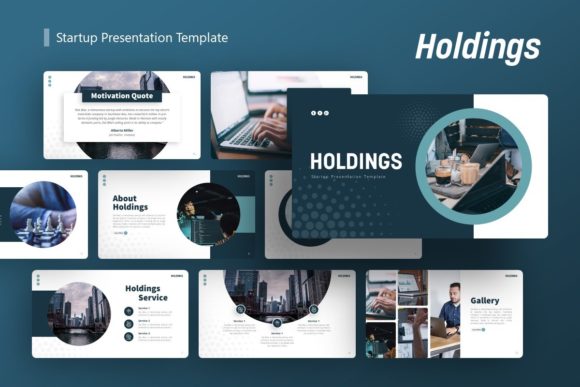
Before a single slide is populated with content, the Presentation Template - Holdings functions as a planning framework. For startups and corporate teams alike, the blank canvas can be paralyzing. By utilizing a pre-structured set of 36 slides, teams can reverse-engineer their narrative flow. The template acts as a checklist for necessary information, prompting users to consider aspects of their business or project they might otherwise overlook. When preparing a pitch deck or a company profile, the existing layouts guide the organization of financial projections, team introductions, and market analysis.
This preparation phase is critical for workflow efficiency. Instead of designing from scratch, which introduces variables in quality and time expenditure, users can focus entirely on content strategy. The handcrafted infographics included in the PowerPoint file allow for rapid visualization of data during the drafting stage. Teams can use these placeholders during internal strategy meetings to map out concepts before finalizing the actual numbers. This makes the template a living document during the decision-making process, facilitating faster feedback loops and clearer internal communication before external presentations occur.
Streamlining Execution Through Master Slides and Customization
The practical value of the Presentation Template - Holdings lies in its technical architecture, specifically the use of Master Slides. For professionals managing multiple projects or clients, maintaining brand consistency manually is prone to error and inefficiency. Master Slides centralize design elements, allowing global changes to fonts, color palettes, and logos across all 36 slides simultaneously. This feature integrates seamlessly into agency workflows where rebranding or client-specific customization is frequent. A change made at the master level propagates instantly, reducing hours of formatting work to mere minutes.
Customization extends beyond simple color swaps. All graphics are resizable and editable vectors, meaning they remain crisp regardless of screen size or print format. This pixel-perfect quality ensures that whether the presentation is viewed on a mobile device during a remote call or projected in a large conference hall, the professional integrity of the visual assets remains intact. For photographers and portfolio users, the drag-and-drop picture placeholders streamline the process of swapping assets. This reduces the friction typically associated with updating portfolios, encouraging more frequent updates and keeping personal branding current without requiring advanced graphic design skills.
Integration with Broader Business Ecosystems
A presentation rarely exists in isolation; it interacts with various other tools and platforms within a professional ecosystem. The Presentation Template - Holdings is designed to complement standard business software rather than compete with it. Because it is delivered as a .PPTX file, it maintains full compatibility with Microsoft PowerPoint, ensuring that animations, transitions, and embedded media function correctly in enterprise environments. This compatibility is vital for corporate users who must adhere to strict IT security protocols and software standards.
Furthermore, the inclusion of vector icons and documentation files facilitates integration with other design resources. Marketers and educators can extract specific infographic elements for use in social media posts, email newsletters, or printed handouts, creating a cohesive cross-channel visual identity. The documentation file serves as an onboarding resource for new team members, reducing the learning curve associated with adopting new templates. When collaborating with external stakeholders or freelancers, providing a standardized template ensures that contributions align with the overall aesthetic, minimizing revision cycles and maintaining quality control across distributed teams.
Practical Implementation Across Diverse Use Cases
Different professional contexts require different approaches to implementation. Understanding how to adapt the Presentation Template - Holdings to specific scenarios maximizes its utility.
- Startup Pitch Decks: Investors expect specific data points presented in a logical sequence. Use the template’s predefined structure to ensure all critical metrics are covered. The handcrafted infographics are particularly useful here for simplifying complex business models or growth trajectories into digestible visuals.
- Creative Agency Portfolios: Visual impact takes precedence over text density. Utilize the image-heavy layouts and minimal typography options to let the work speak for itself. The drag-and-drop functionality allows for rapid iteration when tailoring portfolios for specific prospective clients.
- Corporate Reporting: Consistency and clarity are paramount. Leverage Master Slides to enforce corporate branding guidelines strictly. Use the editable charts to update quarterly figures efficiently, ensuring that historical data presentations remain visually consistent with current reports.
- Personal Branding: Freelancers and consultants can use the template to create modular presentation kits. Create a "master" version with your core services and bio, then duplicate and customize specific sections for different leads. This modular approach saves time while allowing for personalized outreach.
Maintaining Quality Control and Long-Term Usability
To derive lasting value from the Presentation Template - Holdings, users must establish protocols for maintenance and quality assurance. While the template provides a high-quality starting point, the end result depends on disciplined usage. It is essential to remember that demo images are for preview purposes only; replacing them with high-resolution, relevant assets is non-negotiable for professional output. Users should maintain a library of approved, optimized images that match the template’s aspect ratios to prevent distortion or pixelation.
Long-term usability also depends on file organization. Saving customized versions as distinct templates for recurring tasks prevents accidental overwrites of the master source file. For agencies, creating a centralized repository of updated brand assets ensures that every new presentation starts with the most current information. Regular audits of the template library help identify underutilized slides or outdated design trends, allowing for iterative improvements. By treating the template as a managed asset rather than a disposable tool, organizations protect their investment and ensure consistent communication standards over time.
Enhancing Workflow Efficiency and Reducing Cognitive Load
Ultimately, the adoption of the Presentation Template - Holdings is an exercise in cognitive load management. Design decisions consume mental energy that could otherwise be directed toward strategy, storytelling, and relationship building. By outsourcing layout, typography, and color theory to a professionally crafted system, users free up significant bandwidth. This shift allows entrepreneurs and creators to focus on the substance of their message rather than the mechanics of its delivery.
The efficiency gains compound over time. What initially takes days to design can be accomplished in hours, and what took hours can be done in minutes. This acceleration enables more responsive communication, allowing businesses to capitalize on opportunities faster. Whether responding to a sudden RFP, updating investors on a pivot, or refreshing a personal portfolio for a job search, having a reliable, flexible, and high-quality template system in place transforms presentation creation from a bottleneck into a streamlined component of the broader professional workflow. The result is not just a better-looking slide deck, but a more agile and effective communication practice.