Elevating Summer Campaigns: The Strategic Value of the Sunscreen Protection Banner Info Set
In the rapidly evolving landscape of digital marketing and e-commerce, the transition between seasons dictates more than just inventory changes; it demands a complete visual overhaul. For professionals, creators, and entrepreneurs operating in the health, beauty, and lifestyle sectors, the onset of summer presents a unique challenge. The market becomes saturated with generic imagery, making brand differentiation increasingly difficult. This is where specialized design assets like the Sunscreen Protection Banner Info Set transition from mere decorative elements to critical business tools. These resources are not simply about aesthetics; they are about communicating complex product benefits instantly in an attention-scarce environment.
The modern consumer journey is visually driven. When a potential customer lands on a webpage or scrolls through a social feed, they process visual information milliseconds before reading copy. A flat illustration of a 4 sunscreen protection bottle vector infographic banner serves as an immediate cognitive anchor. It signals relevance, safety, and professional credibility. For marketers and freelancers tasked with high-volume content production, leveraging comprehensive sets that include JPG, EPS, AI, PSD, and PNG formats ensures that visual consistency is maintained across every touchpoint, from high-resolution print ads to responsive mobile web banners.
The Intersection of Visual Communication and Consumer Safety
To understand why the Sunscreen Protection Banner Info Set has gained traction among industry professionals, we must look at the broader context of consumer wellness. Sun protection is no longer a niche concern reserved for beach vacations; it has become a year-round pillar of skincare and health routines. Consequently, the messaging surrounding these products has shifted from fear-based warnings to educational empowerment. Consumers are actively seeking information regarding SPF levels, broad-spectrum coverage, water resistance, and ingredient safety.
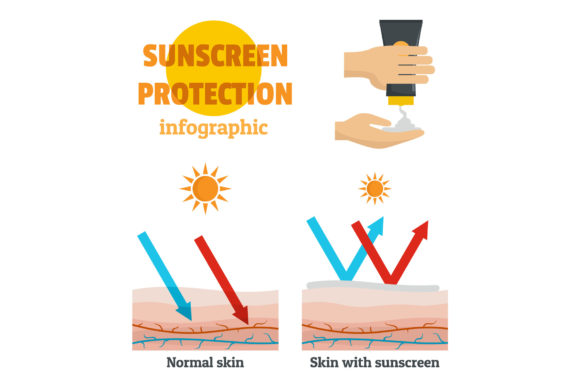
This shift necessitates a change in creative assets. Traditional photography, while beautiful, often struggles to convey technical specifications without heavy text overlays that clutter the design. Vector-based infographics solve this friction point. By utilizing a flat illustration style, brands can present data-driven content in an approachable, non-clinical manner. The infographic banner set allows creators to visualize abstract concepts—such as UVA versus UVB protection or application frequency—through intuitive iconography and clean lines. This aligns perfectly with current UX/UI trends that prioritize clarity and accessibility over ornamental complexity.
Meeting the Demands of Agile Content Workflows
For freelancers and agency teams, efficiency is the currency of success. The expectation for omnichannel marketing means that a single campaign concept must be adapted for dozens of placements. Relying on custom illustrations for every variation is cost-prohibitive and time-consuming. Conversely, using low-quality stock assets damages brand equity. The Sunscreen Protection Banner Info Set occupies the vital middle ground: premium quality with modular flexibility.
The availability of multiple source files is a practical necessity in professional workflows:
- AI and EPS Files: These vector formats are indispensable for scalability. A banner designed for a website header can be resized for a billboard or a business card without pixelation. More importantly, vectors allow designers to alter colors to match specific brand palettes, adjust composition, or isolate individual bottles for use in separate UI components.
- PSD Files: Layered Photoshop documents provide depth for those who prefer raster editing. They allow for the integration of photorealistic textures, advanced lighting effects, or smart object replacements, enabling a hybrid aesthetic that blends flat illustration with tangible product realism.
- PNG and JPG: These ready-to-use formats serve immediate needs for social media managers and email marketers who require quick deployment without opening heavy design software. Transparent PNGs are particularly valuable for overlaying graphics onto existing lifestyle photography or colored backgrounds.
This multi-format approach supports an agile methodology, allowing teams to iterate quickly based on performance data. If A/B testing reveals that a specific bottle configuration drives higher click-through rates, the vector assets allow for rapid modification and redeployment.
Trends Driving the Adoption of Flat Vector Infographics
The preference for flat illustration within the Sunscreen Protection Banner Info Set is not arbitrary; it reflects significant developments in digital design and technology. We are currently witnessing a move away from hyper-realism in favor of stylized abstraction. This trend is driven by several factors relevant to forward-looking businesses.
Mobile-First Legibility: With the majority of traffic originating from mobile devices, intricate details often get lost on small screens. Flat design relies on bold shapes, high contrast, and negative space, ensuring that the core message remains legible regardless of viewport size. A complex 3D render might look stunning on a desktop monitor but becomes indistinguishable mud on a smartphone. Vector infographics retain their integrity across all resolutions.
Loading Speed and Core Web Vitals: Performance is a ranking factor. Vector graphics (SVG/EPS) are significantly lighter in file size compared to high-resolution photographs. Integrating lightweight infographic banners contributes to faster page load times, improving both SEO rankings and user experience. In an era where bounce rates correlate directly with load speed, asset optimization is a strategic imperative.
Cross-Cultural Universality: Flat illustration tends to be more culturally neutral than photography. Stock photos of people can sometimes alienate specific demographics due to lack of representation or cultural mismatches. Abstract representations of sunscreen bottles and protection shields focus purely on the product benefit, making the Sunscreen Protection Banner Info Set a safer and more inclusive choice for global campaigns.
Practical Applications Across Industries
While obviously essential for skincare brands, the utility of these assets extends far beyond direct-to-consumer cosmetics. Understanding these adjacent applications helps professionals maximize the ROI of their design investments.
- Travel and Hospitality: Hotels, resorts, and cruise lines use sunscreen infographics in welcome packets, poolside signage, and booking confirmation emails to demonstrate care for guest safety. Visualizing sun safety protocols enhances the perceived value of the hospitality experience.
- Healthcare and Dermatology: Medical practices utilize these banners in patient education portals and waiting room displays. The friendly, flat illustration style reduces clinical anxiety, making medical advice feel more actionable and less intimidating.
- Outdoor Retail and Adventure Tourism: Brands selling hiking gear, swimwear, or camping equipment use protection banners to cross-sell accessories. An infographic showing "essential pack list" items including sunscreen integrates naturally into product guides and blog content.
- Parenting and Family Lifestyle Blogs: Content creators in this niche rely on trust. Using professional, accurate infographics rather than amateur clip art establishes authority. These visuals break up long-form text about family safety, increasing dwell time and engagement.
Future-Proofing Your Visual Strategy
As we look toward the future of digital commerce, the line between content and utility will continue to blur. Static banners are evolving into interactive elements. Because the Sunscreen Protection Banner Info Set provides source files in AI and EPS, forward-thinking creators are already repurposing these assets for motion graphics and micro-interactions. Imagine a web banner where hovering over a specific bottle triggers an animation explaining its SPF rating, or an email header where the protection shield pulses gently to draw attention to a limited-time offer.
Furthermore, as AI-generated imagery becomes prevalent, there is a growing premium on intentional, human-crafted design. AI can generate generic sunscreen images, but it often struggles with accurate text rendering, consistent branding, and precise anatomical or product proportions in infographics. Professionally designed vector sets offer a level of accuracy and brand safety that generative models cannot yet guarantee. Investing in structured, editable assets is a hedge against the homogenization of AI content.
Ultimately, the decision to incorporate a dedicated Sunscreen Protection Banner Info Set into your creative arsenal is a decision to prioritize clarity, efficiency, and adaptability. It acknowledges that in a crowded marketplace, the ability to communicate value quickly and beautifully is a competitive advantage. Whether you are a solo freelancer managing multiple clients or a marketing director overseeing a global brand launch, these assets provide the foundational visual language necessary to connect with today’s informed, visually literate consumer. By bridging the gap between aesthetic appeal and informational utility, these infographic banners do more than decorate a page—they drive understanding, build trust, and facilitate conversion in an increasingly complex digital ecosystem.