Visualizing Mental Health: The Strategic Impact of Stress and Depression Minimal Design
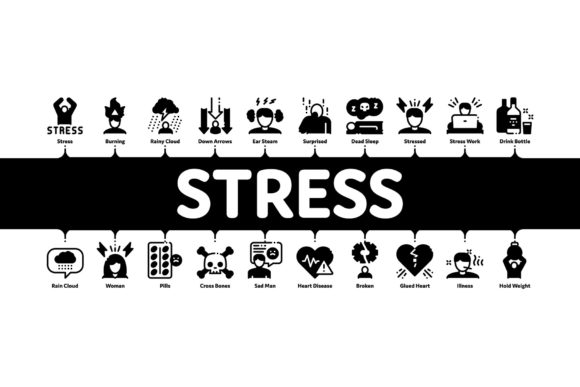
In the complex landscape of digital communication, addressing mental health requires a delicate balance between empathy and clarity. Content creators, healthcare providers, and educators face the persistent challenge of discussing sensitive topics like anxiety and burnout without overwhelming their audience. This is where the aesthetic philosophy of Stress and Depression Minimal design becomes a critical tool. By stripping away visual noise and focusing on essential symbolism, minimal vector art transforms abstract psychological concepts into accessible, digestible narratives. Utilizing specific assets such as web banner vectors featuring anti-stress pills, alcoholic drink bottles, or the angry human with a burning head concept allows communicators to convey profound messages instantly while maintaining a professional and supportive tone.
The Psychology of Visual Simplicity in Mental Health Communication
When an individual is experiencing high levels of stress or depressive symptoms, cognitive load capacity is often significantly reduced. Cluttered, chaotic, or overly realistic imagery can inadvertently exacerbate feelings of overwhelm. Minimalist illustration serves a functional psychological purpose beyond mere aesthetics. It acts as a cognitive filter, presenting complex emotional states in a simplified format that the brain can process quickly and safely.
The use of clean lines, ample negative space, and flat colors in Stress and Depression Minimal graphics creates a sense of order amidst internal chaos. For example, an illustration depicting an "angry human with a burning head" uses metaphor rather than graphic realism to represent frustration. This abstraction allows the viewer to recognize the emotion without triggering a visceral stress response associated with photorealistic depictions of suffering. This approach aligns with trauma-informed design principles, prioritizing the viewer's emotional safety while ensuring the message remains potent and recognizable across diverse cultural contexts.
Decoding Key Symbolism in Vector Illustrations
Effective mental health visuals rely on universally understood semiotics. When selecting or creating infographic web banner vectors, understanding the specific connotations of common symbols is essential for accurate storytelling. These elements serve as visual shorthand, bridging the gap between clinical terminology and public understanding.
- Anti-Stress Pills and Medication: In minimal vector art, pharmaceutical representations are rarely about promoting specific drugs. Instead, they symbolize treatment, intervention, and the medical validity of mental health conditions. A stylized pill icon can represent hope, management strategies, or the intersection of biology and psychology. It validates the user's experience as a treatable condition rather than a personal failure.
- Alcoholic Drink Bottles: Depicting alcohol in mental health content requires nuance. In a minimal style, this symbol typically addresses coping mechanisms, dual diagnosis, or the risks of self-medication. It serves as a conversation starter regarding substance use disorders co-occurring with depression. The simplified rendering prevents the image from appearing celebratory or stigmatizing, keeping the focus on education and awareness.
- The Burning Head Concept: Perhaps the most evocative symbol in this genre, the figure with flames or heat radiating from the head captures the somatic experience of burnout and acute anxiety. It visualizes the feeling of being "overheated" cognitively and emotionally. This metaphor resonates deeply with professionals and students who experience mental exhaustion as a physical sensation, making the invisible visible.
Technical Versatility: Leveraging JPG and EPS Formats
For designers, marketers, and researchers, the utility of Stress and Depression Minimal assets lies in their technical flexibility. Professional vector packs typically include both EPS and JPG formats, each serving distinct roles in a comprehensive content strategy. Understanding when and how to deploy these formats ensures optimal performance across print and digital mediums.
The EPS (Encapsulated PostScript) format is the industry standard for scalability. Because it is vector-based, an EPS file can be resized from a small business card icon to a massive conference backdrop without losing resolution or clarity. This is particularly vital for infographic web banners that may need to be adapted for various screen sizes or repurposed for printed educational pamphlets. Furthermore, EPS files allow for color manipulation. A designer can adjust the palette of an "angry human" illustration to match a brand’s specific accessibility guidelines or to evoke different emotional tones—shifting from alarming reds to calming blues depending on the context of the article or presentation.
Conversely, JPG (Joint Photographic Experts Group) files offer immediate compatibility and ease of use. For bloggers, social media managers, and educators who do not have access to advanced vector editing software, pre-rendered JPGs provide a plug-and-play solution. They are optimized for web performance, ensuring fast load times which is crucial for retaining users seeking mental health information. While less malleable than EPS, high-quality JPGs retain the crispness of minimal line art, making them ideal for blog headers, newsletter inserts, and slide decks where rapid deployment is prioritized over customization.
Applications Across Professional Sectors
The relevance of minimalist mental health illustrations extends far beyond therapy offices. Diverse industries utilize these visual assets to enhance communication, training, and product positioning. The universal language of minimal design allows these concepts to transcend linguistic barriers, making them invaluable for global organizations.
Corporate Wellness and HR: Human resources departments increasingly integrate mental health modules into employee training. Using Stress and Depression Minimal vectors helps normalize conversations around burnout without creating a heavy or accusatory atmosphere. An infographic detailing signs of workplace stress using the "burning head" concept can be more engaging and less intimidating than dense text, encouraging employees to utilize available support resources.
Healthcare and Telemedicine: Medical practitioners and telehealth platforms use these illustrations to explain diagnoses and treatment plans. Visual aids improve patient retention of information. A simple diagram showing the relationship between stress, alcohol consumption, and medication efficacy can clarify complex interactions during brief consultations. The non-threatening nature of minimal art helps reduce patient anxiety during vulnerable discussions.
Educational Institutions: Schools and universities employ these visuals in student handbooks, counseling center websites, and awareness campaigns. For younger demographics accustomed to clean digital interfaces, minimalist aesthetics feel modern and relatable. Illustrations depicting coping mechanisms or warning signs can be integrated into orientation materials, signaling institutional support in a visually cohesive manner.
Content Creators and Publishers: Writers covering mental health topics understand that featured images significantly impact click-through rates and engagement. Generic stock photos of people holding their heads in despair are often perceived as cliché or insensitive. Custom-style minimal vectors offer a fresh alternative that signals thoughtful, high-quality content. They provide visual interest that complements rather than competes with the written word.
Ethical Considerations in Visual Representation
While Stress and Depression Minimal design offers numerous advantages, creators must exercise ethical vigilance. Minimalism should never equate to trivialization. There is a risk that oversimplifying complex disorders might suggest they are easily fixed or superficial. To mitigate this, visuals must always be paired with substantive, evidence-based content. The illustration acts as an entry point, not the entire conversation.
Additionally, inclusivity in representation matters even in abstract art. When using human figures, even stylized ones, consider diversity in body type, gender presentation, and skin tone if color is applied. Mental health struggles are universal, and visual assets should reflect that breadth. Avoid reinforcing stereotypes, such as consistently associating women with sadness or men with anger. The "angry human with burning head" concept, for instance, should be applicable to any demographic to accurately represent the universality of burnout.
Furthermore, context dictates appropriateness. An illustration involving alcohol might be appropriate for an article on addiction recovery but potentially triggering or irrelevant in a piece about pediatric anxiety. Always evaluate the specific needs and vulnerabilities of the target audience before deploying symbolic imagery. The goal is connection and comprehension, not shock value or aesthetic trend-chasing.
Optimizing Visual Assets for SEO and Accessibility
Integrating Stress and Depression Minimal illustrations also presents opportunities for technical SEO and accessibility enhancements. Search engines cannot "see" images; they rely on metadata to understand visual content. Descriptive alt text for an infographic web banner should go beyond generic labels. Instead of "stress illustration," use descriptive phrases like "minimalist vector illustration of person with burning head representing workplace burnout and anxiety." This aligns with long-tail search intent and improves visibility for users seeking specific visual explanations of mental health concepts.
Accessibility extends to users with visual impairments or cognitive processing differences. High contrast is a hallmark of good minimal design, benefiting those with low vision. However, ensure that color is not the sole means of conveying meaning. If a red flame indicates danger or stress, include shape cues or accompanying text labels so colorblind users receive the same information. Properly tagged EPS and JPG files contribute to a more inclusive web, ensuring that mental health resources are accessible to everyone regardless of ability.
File naming conventions also play a role. Before uploading, rename generic files like "vector_001.eps" to descriptive, keyword-rich names such as "stress-depression-minimal-burnout-concept.eps." This practice aids in image search optimization and maintains organizational clarity within large digital asset libraries. For web use, compress JPGs to balance quality and speed, as slow-loading pages can increase user stress—the very antithesis of the content’s purpose.
Ultimately, the power of Stress and Depression Minimal design lies in its ability to foster understanding through reduction. By removing the extraneous, these illustrations highlight what truly matters: the recognition of struggle, the validity of experience, and the possibility of support. Whether rendered as an editable EPS for a national campaign or a lightweight JPG for a personal blog, these visual tools bridge the gap between clinical reality and human empathy. They remind us that even in the depiction of difficult emotions, there can be clarity, order, and a path toward healing. As digital landscapes become increasingly saturated, the quiet confidence of minimal vector art stands out not by shouting, but by offering a clear, compassionate space for reflection and learning.