Future Smart Workplace Vector Template: Visualizing the Evolution of Modern Business
The concept of the workplace has undergone a radical transformation in recent years, shifting from static physical locations to dynamic, technology-driven ecosystems. As organizations navigate this transition, the need to communicate complex strategies regarding sustainability, automation, and employee well-being has never been greater. The Future Smart Workplace Vector Template serves as a critical visual bridge between abstract corporate strategy and tangible understanding. It is not merely a collection of graphics; it is a strategic communication tool designed for professionals who must articulate how environmental regulations, data processes, and linear workflows converge to create the offices of tomorrow.
For marketers, educators, and business leaders, the challenge lies in translating dense technical information into accessible narratives. This template addresses that gap by providing structured visual frameworks that align with current market expectations. Whether presenting to stakeholders about green compliance or explaining a new five-step data protocol to a remote team, these vector assets ensure clarity and professional polish without requiring advanced design skills.
The Intersection of Sustainability and Digital Infrastructure
One of the most significant shifts in modern corporate communication is the integration of environmental responsibility into operational design. The environmental regulation presentation design elements included in this package reflect a growing reality where sustainability is no longer a sidebar but a core operational metric. Professionals are increasingly tasked with reporting on carbon footprints, energy efficiency, and regulatory compliance alongside traditional financial KPIs.
These design elements move beyond generic recycling icons to offer sophisticated visuals that represent circular economies, renewable energy integration, and waste reduction protocols. In an era where greenwashing is heavily scrutinized, using precise, professional-grade visuals helps establish credibility. When a consultant uses these specific vector assets to map out a company’s path to net-zero, they signal a depth of understanding that stock photography simply cannot convey. The templates allow users to customize colors and shapes to match specific regulatory frameworks, ensuring that presentations are both aesthetically pleasing and factually representative of the organization's actual environmental commitments.
Structuring Complexity with Five-Step Data Visualization
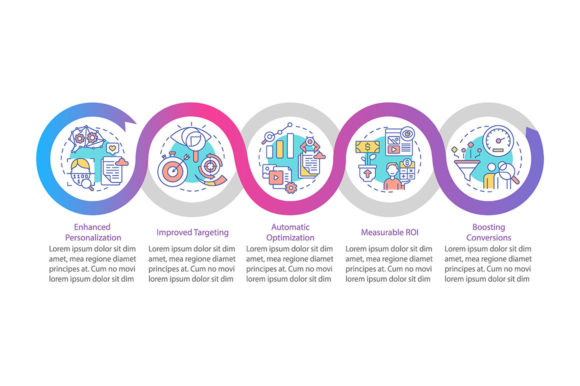
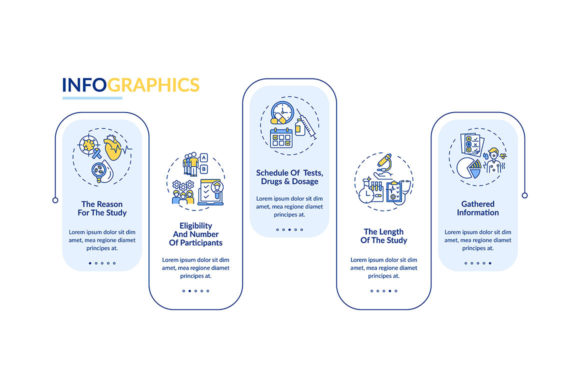
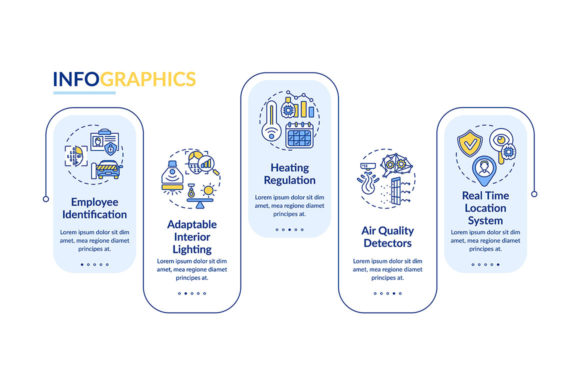
Data overload is a pervasive issue in the smart workplace. Teams are inundated with analytics from IoT sensors, HR platforms, and project management tools. The ability to distill this influx into actionable insights is a defining skill of the modern professional. The data visualization with 5 steps component of this template provides a proven cognitive framework for breaking down complex methodologies.
Why five steps? Cognitive science suggests that working memory can comfortably hold between three to seven items at once. A five-step model strikes the optimal balance between detail and digestibility. This template allows users to map out implementation phases, safety protocols, or digital transformation roadmaps in a way that respects the audience's mental bandwidth. For example, an IT director explaining a cybersecurity rollout can use this layout to guide staff through awareness, assessment, implementation, testing, and maintenance. Unlike free-form charts, this structured approach ensures consistency across different departments, creating a unified visual language that reduces friction during cross-functional collaboration.
Chronological Clarity Through Process Timeline Charts
Smart workplaces are defined by their evolution. They are not static endpoints but continuous journeys of adaptation. The process timeline chart included in this suite is essential for projecting future states while acknowledging historical context. Timelines are often misused as mere lists of dates, but effective timeline design illustrates causality and momentum.
This vector template facilitates the creation of timelines that show dependencies and milestones rather than just chronological markers. For entrepreneurs pitching to investors, this visual demonstrates a realistic grasp of product development cycles. For internal change managers, it helps employees visualize when new technologies will be introduced and when training periods will occur. By making the temporal aspect of change visible, organizations can reduce anxiety associated with transformation. The clean lines and modular nodes of the vector format mean that as plans shift—as they inevitably do in agile environments—the timeline can be updated instantly without redrawing the entire graphic. This flexibility is vital for maintaining accurate documentation in fast-paced sectors.
Linear Icons and the Aesthetics of Efficiency
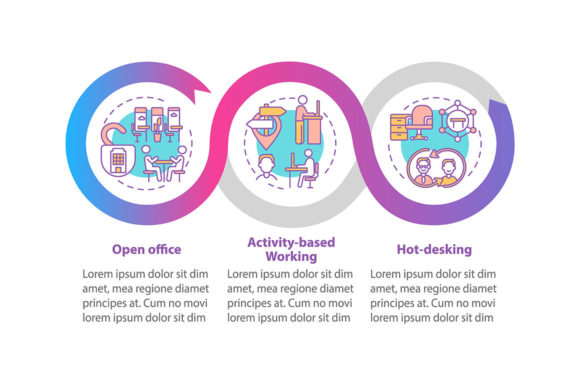
Visual style communicates values before a single word is read. The workflow layout with linear icons embodies the principles of the smart workplace itself: streamlined, uncluttered, and functional. Linear iconography has become the standard in tech-forward design because it scales perfectly across devices and reduces visual noise. In a dense infographic or a detailed slide deck, heavy or filled icons can create clutter that distracts from the message.
These workflow layouts are specifically engineered to depict sequential tasks and parallel processes with equal clarity. For freelancers and creators building portfolios or case studies, this aesthetic signals professionalism and attention to detail. For corporate trainers, the minimalist style ensures that the focus remains on the process being taught rather than decorative flourishes. Furthermore, the consistency of the linear icon set ensures that every element in a presentation feels like part of a cohesive system. This systemic coherence is crucial when discussing smart workplaces, where interoperability and seamless integration are the ultimate goals. Using mismatched visuals to discuss integrated systems creates a subconscious dissonance that undermines the presenter's authority.
Technical Versatility Across Formats
A major pain point for non-designers is file compatibility. A beautiful graphic is useless if it cannot be edited or exported for the intended medium. The comprehensive nature of this resource solves this logistical hurdle. The ZIP file contains EPS, JPG, PNG, SVG, AI formats, covering virtually every use case a professional might encounter.
- AI and EPS: These vector source files are essential for print materials, large-format signage, and deep customization within Adobe Illustrator. They allow for infinite scaling without quality loss, which is critical for trade show banners or office wall murals depicting company values.
- SVG: The Scalable Vector Graphics format is the gold standard for web performance. Smart workplace reports published online benefit from SVGs because they remain crisp on high-DPI screens while keeping page load times low, directly impacting SEO and user experience.
- PNG and JPG: Raster formats remain necessary for quick insertion into Word documents, email newsletters, and social media posts where vector support is limited. Having high-resolution exports ready saves time for marketers working under tight deadlines.
This multi-format approach acknowledges the fragmented nature of modern work. A single campaign might require a billboard (EPS), a website header (SVG), and an Instagram story (PNG). Providing all options in one package eliminates the need for conversion tools that often degrade quality or corrupt layers.
Adapting to Changing User Expectations
The relevance of the Future Smart Workplace Vector Template extends beyond its immediate utility. It reflects a broader shift in how audiences consume business information. Stakeholders today expect transparency and visual evidence. Text-heavy annual reports are being replaced by interactive dashboards and visual summaries. Employees expect onboarding materials that look as polished as the consumer apps they use daily.
By utilizing these templates, creators are not just saving time; they are meeting an elevated baseline of expectation. The "smart" in smart workplace refers to intelligence, but also to intentionality. Every visual choice should serve a purpose. The Future smart workplace vector infographic template encourages this intentional design thinking by providing guardrails that prevent common mistakes like poor contrast, inconsistent alignment, or confusing hierarchy.
Moreover, as hybrid and remote work models solidify, digital assets become the primary touchpoint for organizational culture. The visuals used in Zoom backgrounds, Slack announcements, and digital handbooks define the employee experience as much as physical office furniture once did. Investing in high-quality, editable vector assets is an investment in the digital real estate of the organization. It ensures that whether an employee is in the headquarters or working from a home office, the brand identity and strategic messaging remain consistent, clear, and inspiring.
Practical Implementation for Diverse Professionals
The versatility of this template makes it applicable across a wide spectrum of users. For educators and trainers, the 5-step data visualization and timeline charts transform dry curriculum into engaging learning modules. For entrepreneurs and startups, the professional aesthetic levels the playing field, allowing small teams to present with the visual maturity of established corporations. Environmental consultants can leverage the regulation-specific elements to produce compliance reports that are actually read and understood by clients. Bloggers and content creators focusing on B2B tech or sustainability can use the linear icons and infographics to increase dwell time and shareability of their articles.
Ultimately, the value of this template lies in its ability to democratize high-end design. It removes the barrier between having a strategic vision and communicating it effectively. In a world where the smart workplace is constantly evolving, having a flexible, comprehensive, and professionally designed visual toolkit is not a luxury—it is a fundamental requirement for clear communication. By integrating these elements into your workflow, you ensure that your message about the future is as forward-looking and refined as the subject matter itself.