Visualizing Varicose Veins Disease Minimal: Bridging Medical Accuracy and Design Simplicity
In the intersection of healthcare communication and graphic design, clarity is paramount. When addressing complex vascular conditions, professionals often struggle to balance anatomical precision with aesthetic accessibility. The concept of Varicose Veins Disease Minimal represents a critical evolution in medical illustration, stripping away unnecessary visual noise to focus on essential pathology and treatment pathways. This approach is not merely an artistic choice but a functional necessity for educators, marketers, and clinicians who need to convey sensitive health information without overwhelming their audience. By utilizing specialized vector assets and color illustrations, creators can transform dense medical data into digestible, engaging content that serves both educational and commercial purposes.
The Strategic Value of Minimalist Medical Vectors
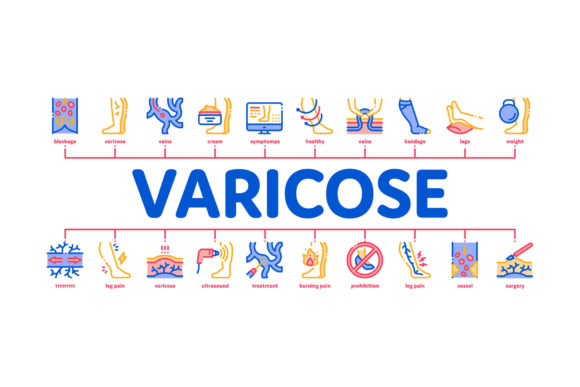
Minimalism in medical design serves a distinct cognitive function. When patients or students encounter detailed, photorealistic images of venous insufficiency, the emotional response can sometimes hinder information retention. A Varicose Veins Disease Minimal Infographic Web Banner Vector mitigates this by using clean lines, flat colors, and simplified anatomy to direct attention specifically to the mechanism of disease or the method of treatment. This stylistic reduction allows for faster processing of visual information, making it ideal for web banners, social media campaigns, and patient brochures where attention spans are limited.
For business owners and content creators, the versatility of these assets is a significant operational advantage. Unlike raster images, vector formats maintain integrity at any scale. A minimalist illustration designed for a mobile app icon can be scaled up to a billboard or a conference backdrop without pixelation. This scalability ensures brand consistency across diverse touchpoints, from digital ads to printed educational pamphlets. Furthermore, the abstract nature of minimal design often ages better than trendy, hyper-realistic 3D renders, providing long-term value for evergreen health content.
Depicting Symptoms and Topical Treatments with Clarity
One of the most common search intents regarding venous health involves identifying symptoms and understanding non-invasive management. Illustrations focusing on Legs Pain And Medicine Cream must navigate a delicate balance. They need to validate the patient's experience of discomfort while presenting topical treatments as a viable, soothing option. In a minimal style, pain is often represented through symbolic visual cues—such as radiating lines, warm color gradients, or localized highlights on the calf or ankle—rather than graphic depictions of inflammation.
This symbolic representation is particularly effective for over-the-counter pharmaceutical marketing and wellness blogs. It allows the viewer to self-identify with the symptom without feeling alienated by clinical gore. When illustrating medicine creams, the minimal aesthetic emphasizes the application process and the area of relief. Clean vectors can show hands applying cream to a stylized leg, highlighting the ergonomic aspects of treatment and the specific anatomical zones targeted by the medication. This visual simplicity supports e-commerce conversion by keeping the focus on the product and its benefit rather than the pathology itself.
Communicating Complex Interventions: Ultrasound and Surgery
Advanced treatments for varicose veins, such as endovenous laser ablation or sclerotherapy, rely heavily on imaging technology. Explaining these procedures requires a higher level of technical accuracy, yet the Ultrasound And Surgery Color Illustration remains a staple of modern patient education. Minimalist vectors excel here by creating schematic cross-sections that reveal what cameras cannot. While a real ultrasound image appears as grainy static to the untrained eye, a color illustration can clearly delineate the vein wall, the catheter tip, and the surrounding tissue in distinct, contrasting hues.
These illustrations serve as vital tools for informed consent. When a surgeon explains a procedure, having a clean, color-coded diagram helps demystify the intervention. Patients can visualize how heat or chemical agents interact with the vessel, reducing anxiety born of uncertainty. For medical device manufacturers, these visuals are essential for training manuals and sales presentations. They highlight the proprietary features of equipment, such as fiber optic tips or specialized probes, against a neutral background that ensures the technology remains the focal point. The use of color coding in these minimal illustrations also aids in distinguishing between arterial and venous flow, or between treated and untreated segments, enhancing the educational utility of the asset.
Technical Specifications and Workflow Integration
The practical application of these design assets depends heavily on file format compatibility. Professional resources typically offer dual delivery in Formats JPG, EPS, each serving distinct roles in the production workflow. Understanding when and how to use these formats is essential for maintaining quality and efficiency.
- EPS (Encapsulated PostScript): This is the master source file for designers. Being vector-based, it contains mathematical paths rather than pixels. Editors can open EPS files in Adobe Illustrator or CorelDRAW to modify colors, adjust line weights, resize elements, or combine multiple icons into a composite infographic. This format is mandatory for print production, large-format signage, and any project requiring customization to match specific brand guidelines.
- JPG (Joint Photographic Experts Group): This raster format is optimized for immediate digital deployment. It is universally compatible with web platforms, presentation software, and document editors. While it lacks editability, a high-resolution JPG provides a quick, lightweight solution for blog posts, email newsletters, and internal memos where design manipulation is unnecessary.
Integrating these assets into a content strategy requires a structured workflow. Designers should always retain the EPS master for future iterations, exporting fresh JPGs only as needed for specific dimensions. This practice prevents the degradation of image quality that occurs when repeatedly saving raster files. Additionally, when sourcing Varicose Veins Disease Minimal assets, verifying the layer structure within the EPS file is crucial. Well-organized files with named layers for "veins," "skin," "tools," and "background" significantly reduce production time, allowing for rapid adaptation across different projects.
Audience-Specific Applications and Considerations
The utility of minimal vascular illustrations extends across a spectrum of users, each with unique requirements and constraints. Recognizing these nuances ensures the selected visuals resonate with the intended demographic.
For Healthcare Providers and Educators
Clinicians and teachers prioritize anatomical correctness over artistic flair. When selecting a Varicose Veins Disease Minimal Infographic Web Banner Vector, they must verify that the valve dysfunction or blood flow direction is depicted accurately according to current medical standards. Minimalism should never compromise scientific validity. These professionals often use such visuals in waiting room displays or lecture slides to reinforce verbal explanations. The goal is to build trust through competence; therefore, the illustration style should be professional and restrained, avoiding cartoonish exaggerations that might undermine clinical authority.
For Marketers and Business Owners
Commercial entities focus on engagement and conversion. For them, the Legs Pain And Medicine Cream imagery must align with brand identity and emotional tone. A spa or wellness clinic might prefer softer pastels and organic curves to evoke relaxation, while a pharmaceutical company might opt for clinical blues and precise geometry to suggest efficacy and safety. Marketers must also consider licensing and exclusivity. Using widely available stock vectors can lead to brand dilution if competitors use identical imagery. Customizing the EPS files or purchasing exclusive rights can differentiate a brand in a crowded marketplace.
For Researchers and Academic Publishers
In academic contexts, visuals support data and hypothesis. Researchers utilizing Ultrasound And Surgery Color Illustration assets need diagrams that can be annotated and integrated into peer-reviewed papers. These illustrations often serve as figures explaining methodology or pathophysiology in review articles. The minimal style is preferred in journals because it reproduces well in both color and grayscale print editions. Researchers must ensure that any modified vectors still adhere to ethical guidelines regarding patient representation and do not inadvertently misrepresent the scope of a study.
Ethical and Cultural Sensitivity in Visual Representation
Creating and using medical imagery carries an inherent responsibility. Even in a minimal style, representations of disease must avoid stigmatization. Varicose veins are often associated with aging, obesity, or pregnancy, and insensitive visuals can reinforce negative body image. A thoughtful Varicose Veins Disease Minimal approach focuses on the condition as a manageable physiological state rather than a cosmetic flaw. Diverse representation in skin tone and body type, even within abstract vectors, promotes inclusivity and broadens the relevance of the content.
Furthermore, cultural perceptions of medical intervention vary. In some contexts, surgical imagery may be viewed as aggressive or frightening. Adapting the visual intensity of Ultrasound And Surgery Color Illustration based on the target audience's cultural background is a mark of sophisticated communication. Softer color palettes, less invasive framing, and emphasis on recovery rather than the procedure itself can make content more acceptable to sensitive audiences. This cultural competence enhances the effectiveness of health communication, ensuring that the message of care and treatment reaches everyone it is intended to help.
Optimizing Digital Assets for Search and Accessibility
Beyond aesthetics and accuracy, the digital performance of these assets matters. When publishing a Varicose Veins Disease Minimal Infographic Web Banner Vector online, proper optimization is required for SEO and accessibility. Alt text should describe the medical concept depicted, not just the file name. For example, "minimalist vector illustration showing venous valve failure and blood pooling in lower leg" provides context for screen readers and search engines alike. File names should be descriptive and hyphenated, incorporating relevant keywords naturally.
Accessibility also extends to color contrast. Minimalist designs sometimes rely on subtle tonal shifts that may be indistinguishable to users with color vision deficiencies. Ensuring that key elements in a Ultrasound And Surgery Color Illustration have sufficient contrast ratios guarantees that the educational value is preserved for all viewers. Tools like color blindness simulators should be part of the quality assurance process before publication. By treating accessibility as a core design parameter rather than an afterthought, creators expand the reach and impact of their health content, fulfilling the ultimate goal of medical communication: universal understanding.