Visualizing Structural Integrity: The Role of Minimalist Foundation Vectors in Construction Design
In the architecture and construction industries, the foundation is literally and metaphorically the most critical component of any structure. Yet, when it comes to communicating these complex underground systems to clients, investors, or students, technical blueprints often fail to convey the full picture. This is where high-quality visual assets like the House Foundation Base Minimal vector collection become indispensable tools. These resources bridge the gap between raw engineering data and accessible visual storytelling, allowing professionals to illustrate everything from pristine concrete slabs to deteriorating basement conditions with clarity and precision.
The Power of Minimalism in Technical Communication
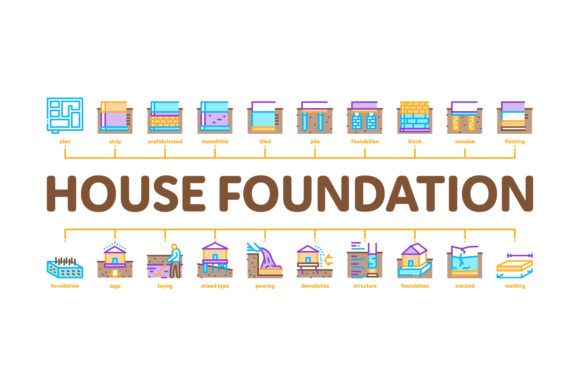
Modern design workflows prioritize speed and adaptability. When an architect or graphic designer needs to create a presentation board or a web banner for a construction firm, they rarely have the time to draw a foundation cross-section from scratch. The House Foundation Base Minimal Infographic Web Banner Vector serves as a foundational asset—pun intended—that streamlines this creative process. Minimalism in this context does not mean a lack of detail; rather, it refers to the strategic removal of visual noise to highlight essential structural relationships.
A cluttered illustration can confuse a homeowner trying to understand why their basement is leaking or how a new addition will be supported. By utilizing clean lines and distinct color blocking, minimalist vectors allow the viewer to focus on the mechanics of the building. Whether depicting a standard concrete footing or a specialized pier-and-beam system, the simplified aesthetic ensures that the educational or marketing message remains the focal point. This approach aligns perfectly with current web design trends, where flat design and scalable graphics dominate user interfaces and digital brochures.
Versatility Across Formats: JPG vs. EPS
One of the primary considerations when selecting visual assets for construction documentation is format flexibility. The availability of both JPG and EPS formats for these foundation illustrations addresses two distinct but equally important needs in the professional workflow.
- EPS (Encapsulated PostScript): This vector format is the gold standard for print media and large-scale displays. Because it is mathematically defined rather than pixel-based, an EPS file of a house foundation can be scaled to the size of a billboard or reduced to a business card icon without losing a single line of crispness. For architects creating detailed site plans or contractors printing educational handouts, the ability to edit colors, line weights, and dimensions within software like Adobe Illustrator is non-negotiable.
- JPG (Joint Photographic Experts Group): While less flexible for editing, JPGs are universally compatible and optimized for digital use. When a real estate agent needs to quickly embed a diagram of a "broken and rickety basement" into a listing description or an email newsletter, the rasterized JPG format offers immediate usability. It requires no specialized software to view and loads quickly on websites, making it ideal for web banners and social media content.
Depicting Reality: From Solid Concrete to Rickety Basements
Construction visuals are not always about showcasing perfection. In fact, some of the most valuable illustrations depict failure states. The inclusion of broken and rickety basement imagery within these vector packs speaks to the practical realities of home inspection, renovation, and insurance assessment. Visualizing structural distress is often more difficult than visualizing new construction because damage is irregular and complex.
A well-designed vector illustration of a compromised foundation can serve multiple purposes. For home inspectors, it provides a standardized way to report issues in digital inspection reports, replacing blurry photos with clear, annotated diagrams. For waterproofing companies, these images act as powerful "before" visuals in marketing materials, helping potential customers identify symptoms they may be experiencing in their own homes. The contrast between the solid, stable House Foundation Base Minimal representations and the distressed variants creates a narrative arc that is highly effective in sales and education.
Plan and Size Illustrations: Accuracy Matters
While artistic style is important, technical accuracy cannot be sacrificed. Assets labeled as plan and size illustration imply a level of dimensional fidelity that generic clip art lacks. In construction communication, proportions matter. A footer that looks too shallow or a basement wall that appears disproportionately thick can undermine the credibility of the entire presentation.
Professionals should look for vectors that adhere to general architectural conventions, even if they are stylized. When using these assets to explain load-bearing capacities or excavation requirements, the relative scale of elements must be correct. This is particularly relevant when creating infographics that compare different foundation types, such as slab-on-grade versus full basements. The ability to manipulate these vectors while maintaining proportional integrity allows designers to customize the illustrations to match specific project parameters without distorting the underlying engineering concepts.
Integrating Foundation Graphics into Modern Workflows
The application of these visual assets extends far beyond traditional architectural drawings. In today’s digital-first environment, construction and real estate professionals operate across multiple platforms, each requiring tailored visual content.
- Web Banners and Landing Pages: Construction companies often struggle with website aesthetics. Stock photos of dirt and concrete can appear unappealing. A custom-colored House Foundation Base Minimal Infographic Web Banner Vector adds a layer of professional polish to service pages, instantly signaling expertise while keeping page load times low compared to heavy photography.
- Client Proposals and Estimates: When bidding on foundation repair work, trust is the currency. Including clear, professional diagrams in a proposal helps demystify the scope of work. Clients are more likely to approve expensive repairs when they can visually understand the difference between a patch job and a comprehensive structural solution.
- Educational Content and Blogging: Content marketing is vital for SEO in the construction niche. Articles explaining "signs of foundation failure" or "types of residential foundations" perform significantly better when accompanied by relevant, high-quality graphics. Using editable vectors allows content creators to add labels, arrows, and brand colors, transforming generic stock art into proprietary educational assets.
- Social Media Engagement: Platforms like Instagram and LinkedIn favor visual content. Carousel posts explaining foundation maintenance tips using minimalist vector slides tend to generate higher engagement than text-only updates. The clean aesthetic of minimal vectors translates exceptionally well to mobile screens where space is limited.
Considerations Before Adopting Vector Assets
Before integrating these resources into a project, users should evaluate several practical factors to ensure they meet specific requirements. First, consider the licensing terms. Commercial projects, especially those used in advertising or client-facing proposals, require appropriate commercial licenses. Second, assess the level of customization needed. If the project requires specific regional foundation styles—such as frost walls in northern climates versus monolithic slabs in warmer regions—the base vector must be adaptable enough to reflect these local building codes accurately.
Additionally, think about color psychology and branding. Foundation issues can be stressful for homeowners. Using harsh reds and blacks in a broken and rickety basement illustration might induce panic, whereas softer earth tones and blues can convey a sense of manageable problem-solving. The advantage of EPS vectors is the ease with which these color palettes can be adjusted to match company branding or to set the appropriate emotional tone for the audience.
Finally, verify the technical quality of the vector paths. Poorly constructed vectors with open paths, excessive anchor points, or grouped layers can be frustrating to edit. High-quality House Foundation Base Minimal assets should be organized logically, with separate layers for concrete, brick, soil, and annotation elements. This organization saves hours of prep time and ensures that the final output looks as professional as the engineering it represents. By carefully selecting and utilizing these visual tools, construction professionals can elevate their communication, ensuring that the critical message of structural integrity is received clearly by every stakeholder involved.